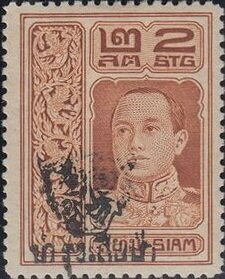
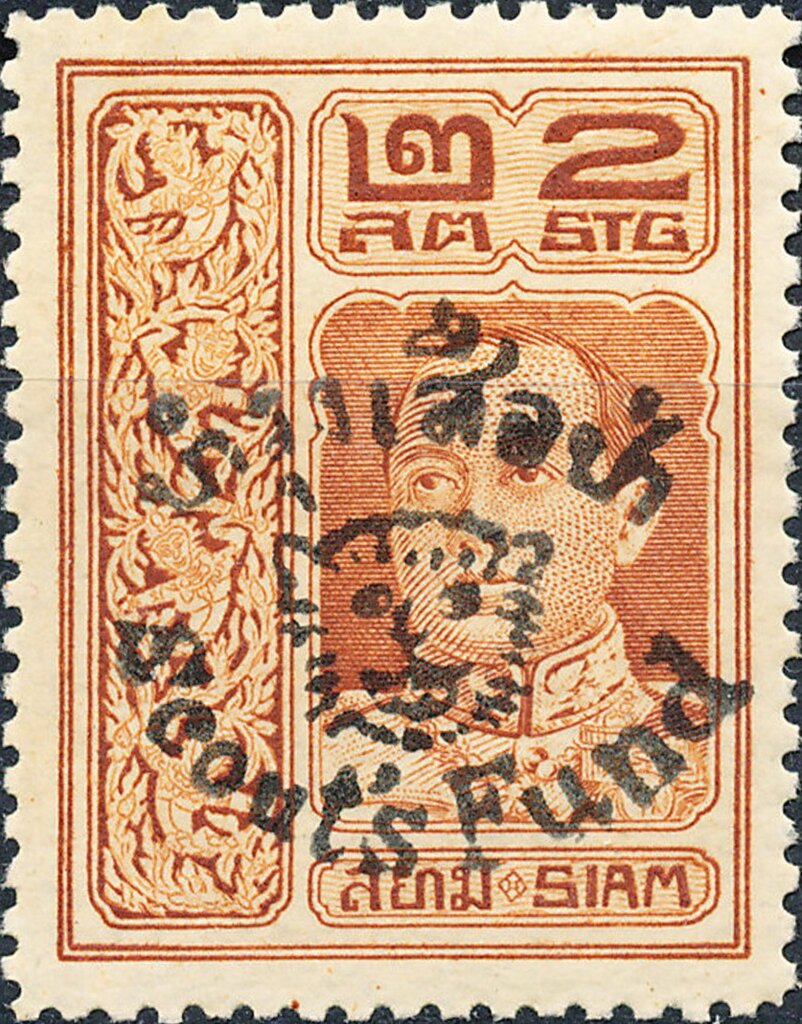
1920.THA.03Scout's Fund — Type III
 Thailand·1920
Semi-postal overprints for Scouting in Siam (Wild Tiger Cub / Luk Suea fund)
Series details
Identity
- CodeSeries code YYYY.ENT.SS — year, 3-letter issuing entity, sequence (e.g. 1900.CGH.01).
1920.THA.03- EntityPostal authority that issued the stamps (country, territory, or historical entity).
- Thailand (THA)
- Year
- 1920-12-17
- Event
- Semi-postal overprints for Scouting in Siam (Wild Tiger Cub / Luk Suea fund)
- TypeIssue kind. Charity issue = postage + voluntary surcharge (e.g. 6+4), not an overprint.
- Charity issue
Catalog numbers
- DomfilDomfil thematic catalog number (scouting).
- 920.25; 920.26; 920.27; 920.28; 920.29; 920.30; 920.31
- ScottScott catalog number (Americas).
- TH B24; TH B25; TH B26; TH B27; TH B28; TH B29; TH B30
- MichelMichel catalog number (Europe / DE).
- TH 176; TH 177; TH 178; TH 179; TH 180; TH 181; TH 182
- YvertYvert & Tellier catalog number (FR).
- TH 165; TH 166; TH 167; TH 168; TH 169; TH 170; TH 171
- Stanley GibbonsStanley Gibbons catalog number (UK / Commonwealth).
- TH 226; TH 227; TH 223; TH 228; TH 224; TH 225; TH 229
History
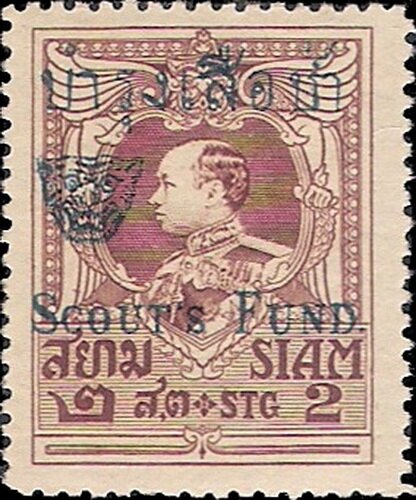
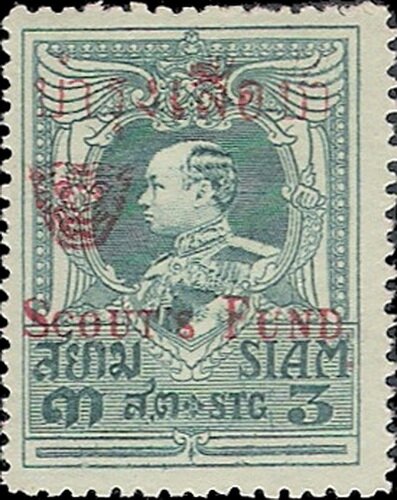
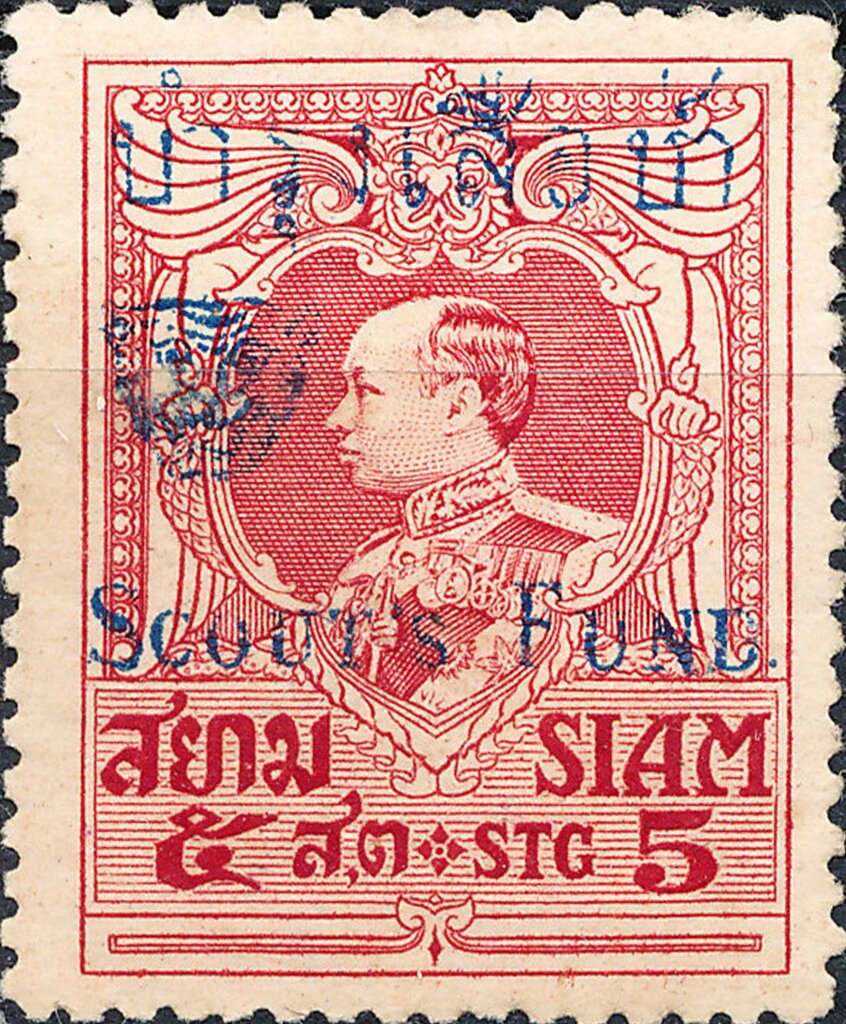
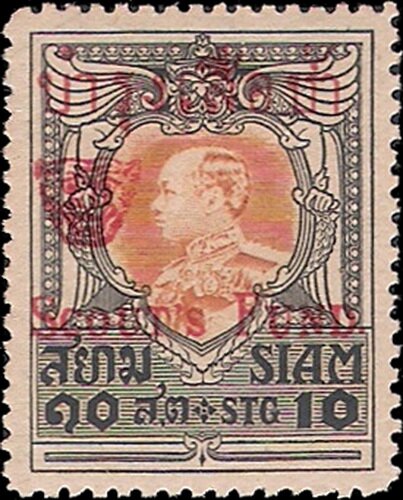
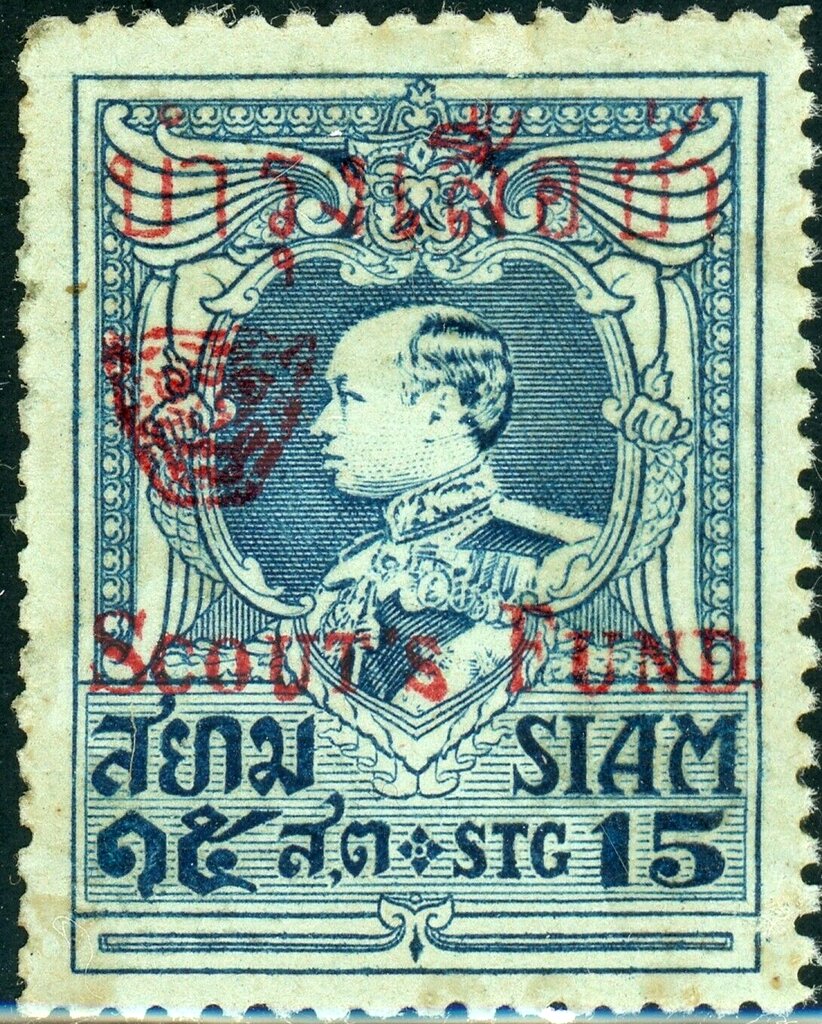
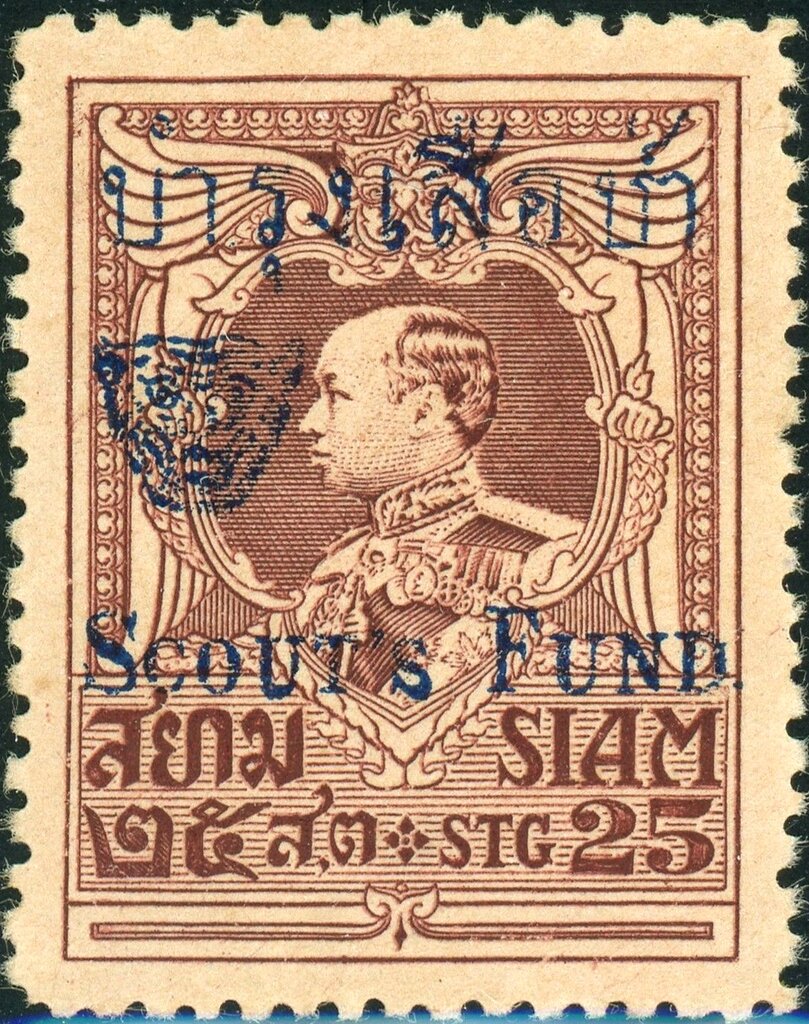
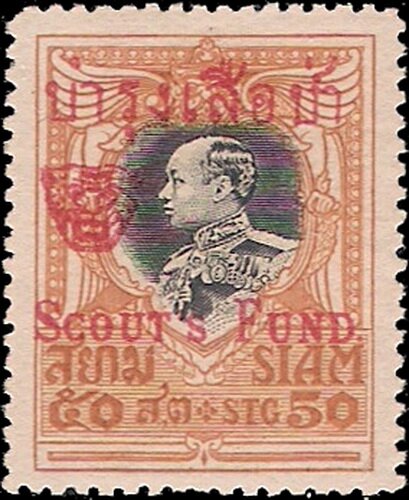
Type III closes the 1920 Siam Scout’s Fund story. Where Types I and II (February) were black rubber handstamps on the Tamagno / Vienna portrait issues, Type III — catalogued for December 1920 — is printed from metal type in blue or red ink, depending on face value. Genuine Type III overprints are never black; any “black Type III” is a forgery.
The campaign was still the same: semi-postals whose premium financed Scouting in Siam under King Vajiravudh (Rama VI), patron of the Wild Tiger Corps and of the Luk Suea (“Tiger Cubs”). The overprint again pairs a tiger’s head with the English legend “Scout’s Fund” and Thai text — the tiger emblem of the corps.
The base stamps differ from Types I–II. Type III uses a Waterlow & Sons engraved set with a framed profile portrait of King Vajiravudh facing left, not the three-quarter frontals of the earlier series. There is no separate Chulalongkorn high value in this set. Face values are seven single satang denominations (2, 3, 5, 10, 15, 25, 50 st) rather than the dual postage+charity figures of Types I–II (Scott B24–B30 / Michel TH 176–182).
Summary of the three series: Type I = first black rubber tiger design; Type II = second black rubber tiger design on the same royal portrait family; Type III = metal-type blue/red overprint on a different Waterlow profile set, seven values. Together they are among the earliest classic Scout semi-postals of Asia — and among the most forged.
ATA 1964 tabulates Type III colours of stamp, paper and overprint (blue or red metal type on the various satang values) and again warns of forgeries and of very few genuine covers surviving.
Notes
- Black Type III overprints are forgeries; size variants of the OP are suspect
Stamps in this series
7 pieces2 satang — King Vajiravudh, Type III
3 satang — King Vajiravudh, Type III
5 satang — King Vajiravudh, Type III
10 satang — King Vajiravudh, Type III
15 satang — King Vajiravudh, Type III
25 satang — King Vajiravudh, Type III