
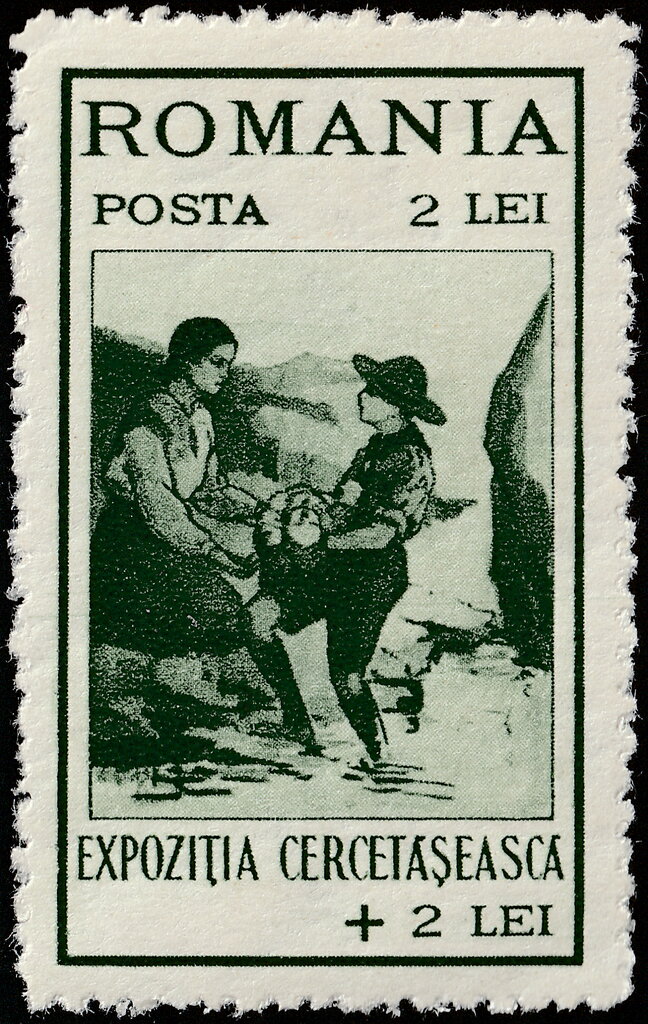
Scout saving a child — 2 + 2 lei
Piece details
Identity
- Piece codeStamp code YYYY.ENT.SS-PP — series code plus stamp order (e.g. 1900.CGH.01-02).
1931.ROU.01-02- SeriesThe set this stamp belongs to.
- Boy Scout Exhibition — Bucharest
1931.ROU.01· piece 2 of 5 - EntityPostal authority that issued the stamps (country, territory, or historical entity).
 Romania (ROU)
- Year / date
- 1931-06-08
- Face valueDenomination on the stamp; +n is a charity surcharge when present.
- 2 + 2 lei
- Format
- Stamp
- TypeIssue kind. Charity issue = postage + voluntary surcharge (e.g. 6+4), not an overprint.
- Charity issue
- Colors
- Dark green
- CollectionIn collection if you have it; Purchased if it is bought but not yet received (do not buy again); Wanted otherwise.
- ✓ In collection
Production
- PerforationsHole gauge between stamps (e.g. 12, 13½). Higher ≈ finer.
- linha13½
- Printing
- Photogravure
- Size
- 26 x 42 mm
Catalog numbers
- DomfilDomfil thematic catalog number (scouting).
- 931.29
- ScottScott catalog number (Americas).
- RO B27
- MichelMichel catalog number (Europe / DE).
- RO 414
- YvertYvert & Tellier catalog number (FR).
- RO 423
- Stanley GibbonsStanley Gibbons catalog number (UK / Commonwealth).
- RO 1222
Notes
Scout rescuing a child. Semi-postal for the Boy Scout Exhibition, Bucharest.
Series history
On 5 July 1931 Romania issued a set of five semi-postal stamps for the Boy Scout Exhibition in Bucharest (București). Each stamp sold at double face — postage plus an equal surtax for Scouting (1+1, 2+2, 3+3, 4+4 and 6+6 lei). SOSOW and standard catalogues call the issue the first Romanian set devoted to scouting activities, not merely a royal portrait with a Scout badge.
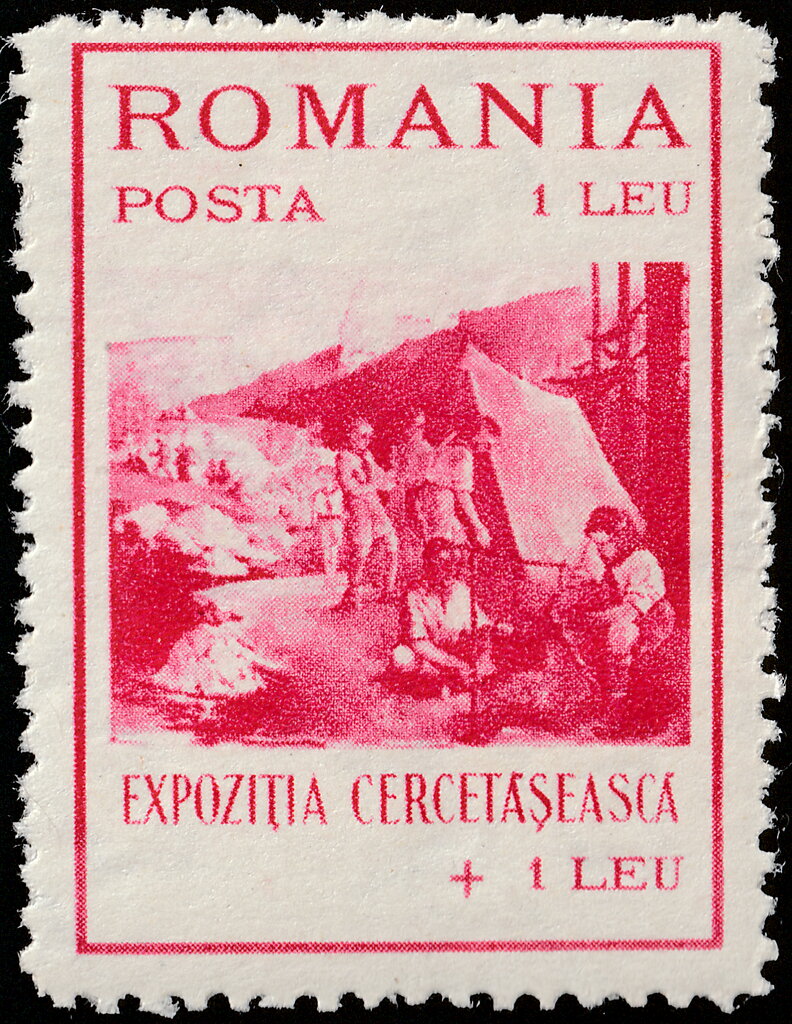
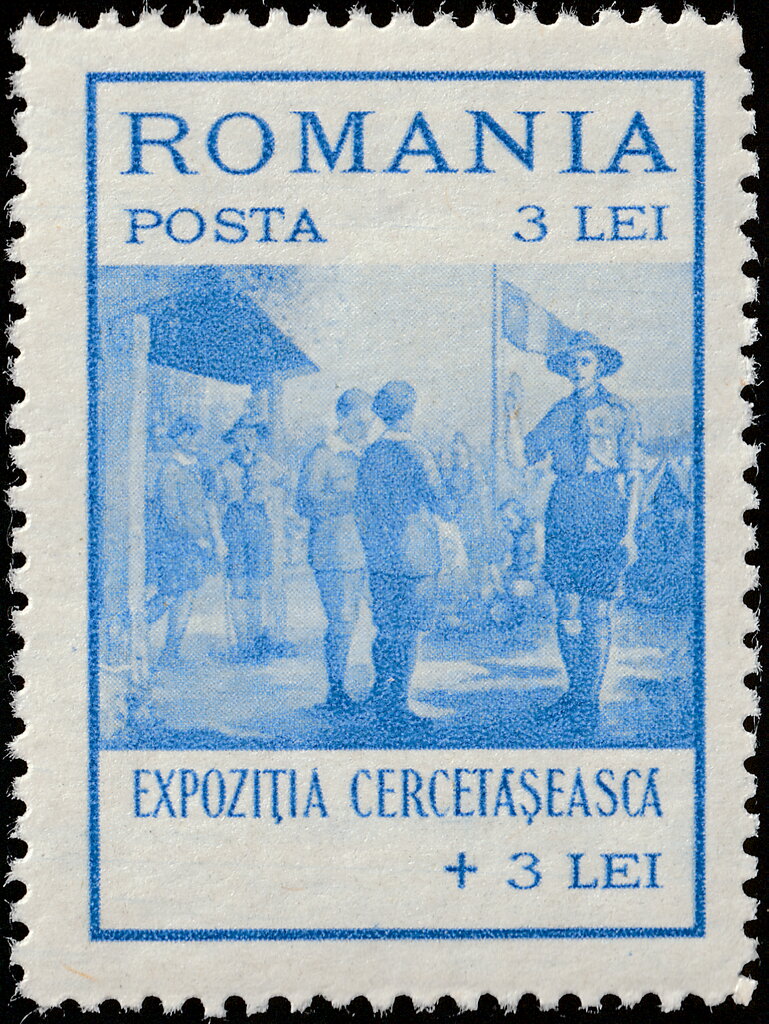
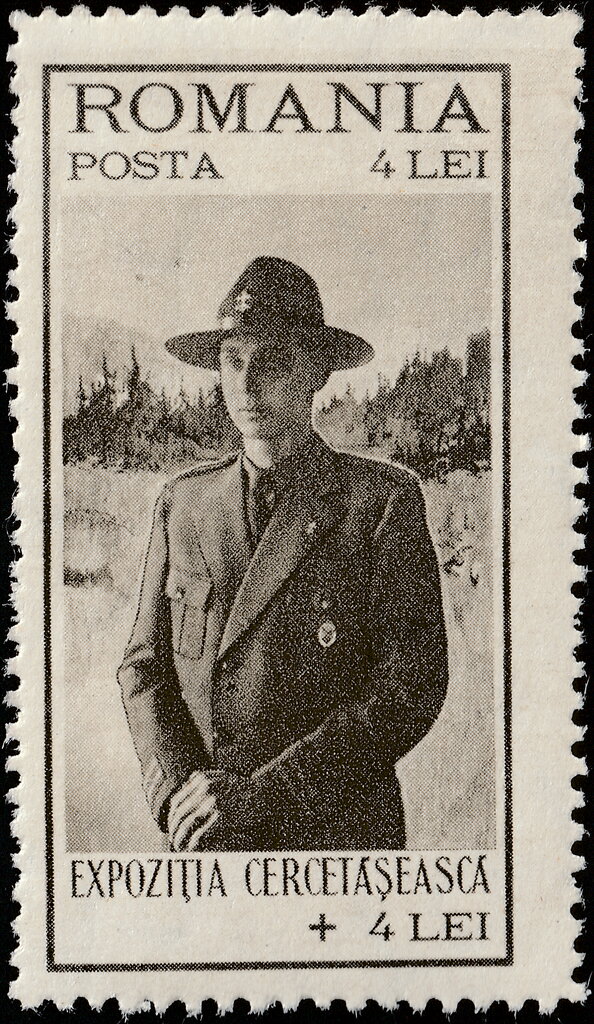
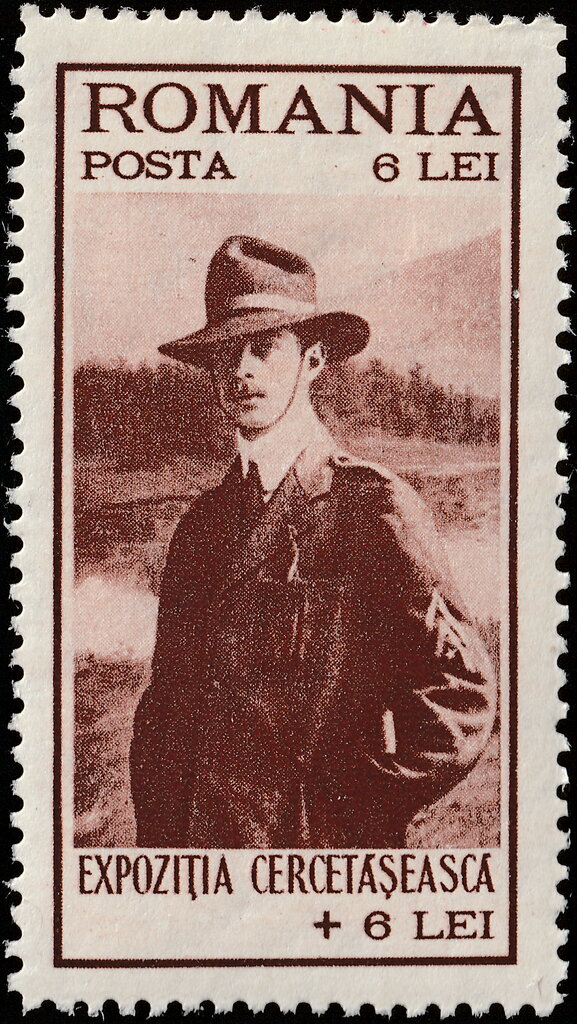
The designs climb from field life to the monarchy: a Scouts’ camp (1+1 l, carmine); a Scout rescuing a child (2+2 l, dark green); a swearing-in / investiture ceremony (3+3 l, navy); Prince Nicholas in Scout uniform (4+4 l, olive); and King Carol II (1893–1953) in Scout uniform (6+6 l, brown). Carol II was an active patron of Romanian youth organisations; the high value places the crown at the head of the Scout movement as the exhibition presented it to the public.
Production was at the Government Printing Works by photogravure, perforation 13½, watermark crown over PTT (multiple). Each value is reported at 200,000. Valid as ordinary postage plus the Scout fund, the set is a classic early European Scout semi-postal — and, with the Siam and Hungarian predecessors, among the first national postal issues worldwide to show Scouts in action rather than only badges or emblems.
ATA 1964 stresses the role of Prince Nicholas as Chief Scout of Romania and calls this the first set of stamps picturing Scout activities (camp cooking, rescue, investiture of a boy not yet in uniform as a Tenderfoot, then Prince Nicholas and King Carol II in Scout leaders’ uniforms). Fake cancellations of Timisoara and Bucurest are known; Siret-Bucovina is believed genuine.