5s on 6s + 20 satang — King Vajiravudh, Type I
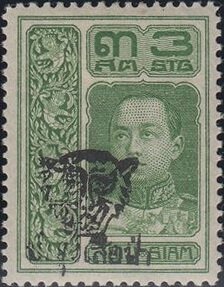
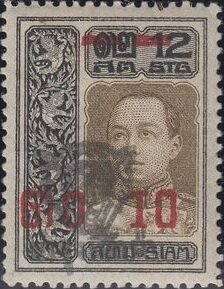
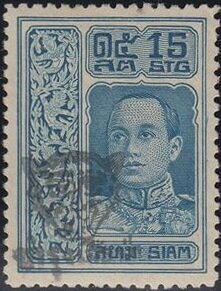
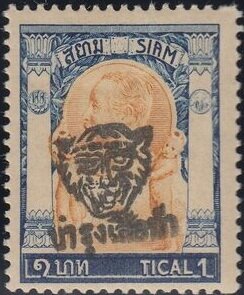
Piece details
Identity
- Piece codeStamp code YYYY.ENT.SS-PP — series code plus stamp order (e.g. 1900.CGH.01-02).
1920.THA.01-03- SeriesThe set this stamp belongs to.
- Scout's Fund — Type I
1920.THA.01· piece 3 of 6 - EntityPostal authority that issued the stamps (country, territory, or historical entity).
 Thailand (THA)
- Year / date
- 1920-02-03
- Face valueDenomination on the stamp; +n is a charity surcharge when present.
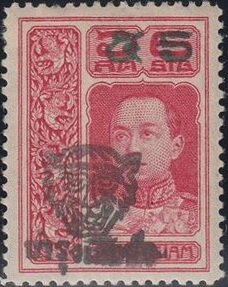
- 5 on 6 + 20 satang
- Format
- Stamp
- TypeIssue kind. Charity issue = postage + voluntary surcharge (e.g. 6+4), not an overprint.
- Charity issue
- Colors
- Carmine / pink
- CollectionIn collection if you have it; Purchased if it is bought but not yet received (do not buy again); Wanted otherwise.
- ✓ In collection
Production
- PerforationsHole gauge between stamps (e.g. 12, 13½). Higher ≈ finer.
- 14 x 14½
- Printing
- Recess
- Size
- 23 x 29 mm
Catalog numbers
- DomfilDomfil thematic catalog number (scouting).
- 919.5
- ScottScott catalog number (Americas).
- TH B16
- MichelMichel catalog number (Europe / DE).
- TH 156
- YvertYvert & Tellier catalog number (FR).
- TH 148
- Stanley GibbonsStanley Gibbons catalog number (UK / Commonwealth).
- TH 201
Notes
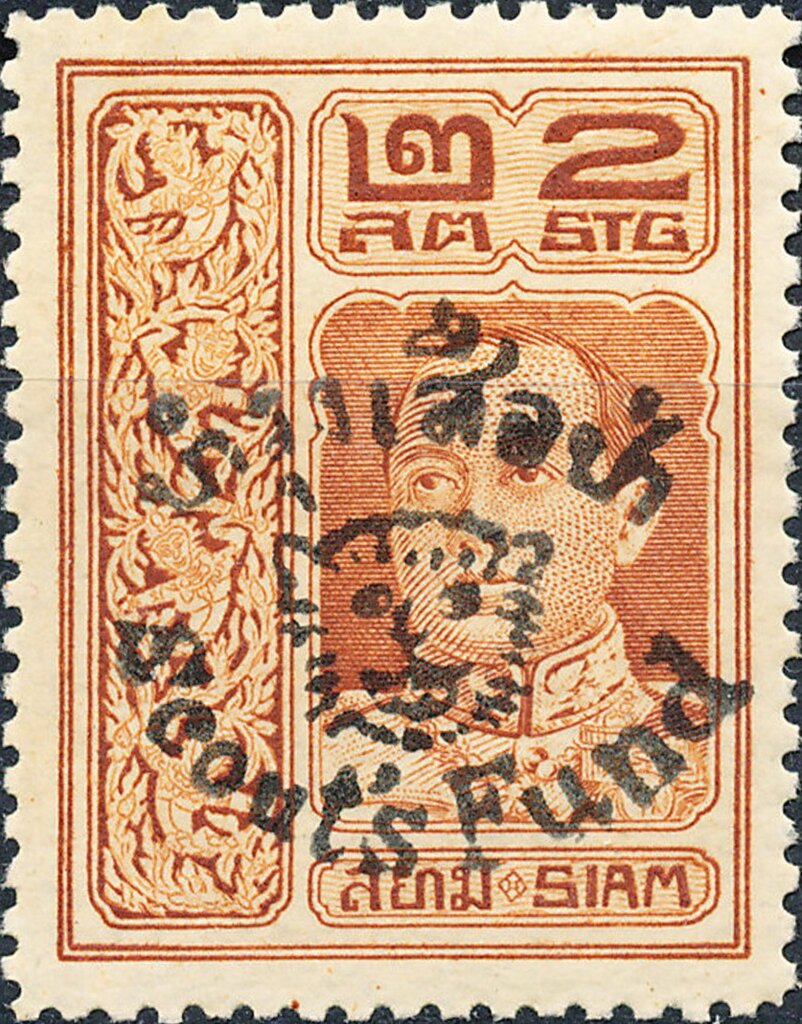
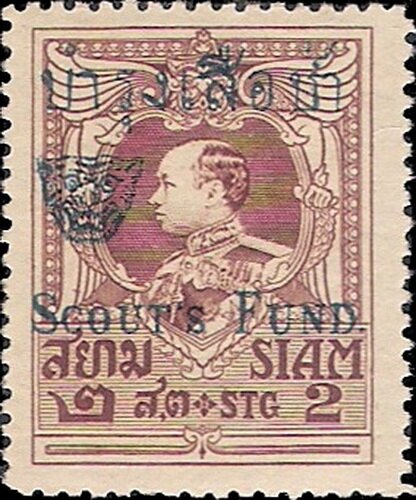
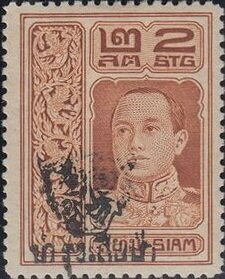
Black Type I rubber overprint on the 6 satang stamp, with Scout fund surcharge. Portrait of King Vajiravudh (Rama VI).
Series history
In February 1920 the Kingdom of Siam issued its first semi-postal stamps for the Scout movement — the famous “Scout’s Fund” overprints. The surplus over postage went to Scouting in Siam, linked to the junior arm of the Wild Tiger Corps (กองเสือป่า): the Luk Suea (“Tiger Cubs”), the roots of today’s National Scout Organization of Thailand.
King Vajiravudh (Rama VI, reigned 1910–1925) had founded the adult Wild Tiger Corps in 1911 as a royal paramilitary and was an enthusiastic patron of Scouting. Contemporary accounts also place a visit by Lord Baden-Powell among the influences that cemented royal support. The overprint shows a tiger’s head with wording in Thai and English (“Scout’s Fund”) — the tiger being the emblem of the Wild Tigers / Tiger Cubs.
Type I is the first of three overprint series. It is a black rubber handstamp, applied stamp by stamp, so position and inking vary widely. The base stamps are engraved portraits of the kings: most values show King Vajiravudh (Rama VI); the high 1 tical value shows his father, King Chulalongkorn (Rama V). Design of the main series is by C. Tamagno; printing is mainly Imperial Printing Works (Austria), with some values by Waterlow & Sons or Giesecke & Devrient. Values are dual (postage + charity), Scott B12–B17.
How the three series differ: Type I and Type II are both black rubber handstamps but use different tiger-head designs; Type III (December 1920) is a metal-type overprint in blue or red on a different Waterlow portrait set, with single face values and no dual +charity figure. Forgeries of all three types are frequent — black Type III overprints, for example, are always fake.
ATA 1964 records that a visit by Baden-Powell to Siam before 1920 helped produce enthusiastic royal support, with King Rama VI becoming first president of the Siamese Boy Scouts Association. It warns of fake overprints on genuine stamps and cards, inverted overprints (e.g. B16), missing bottom-line «Scout’s Fund» on some B25, and the scarcity of genuine commercial or registered covers.