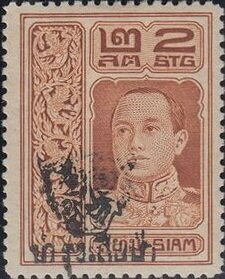
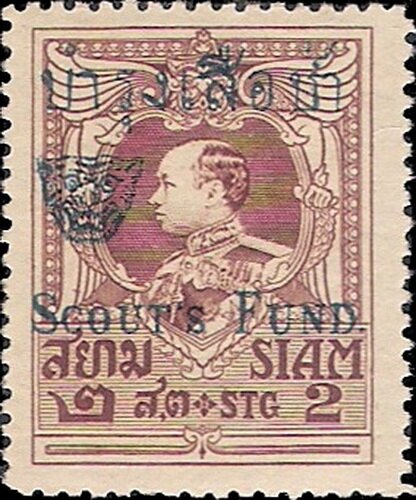
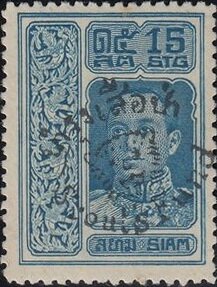
15 + 5 satang — King Vajiravudh, Type II
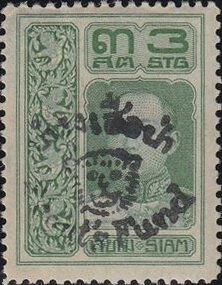
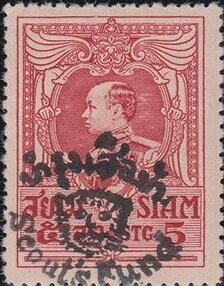
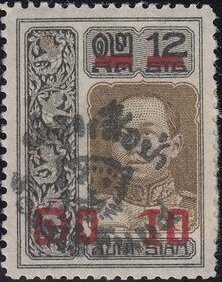
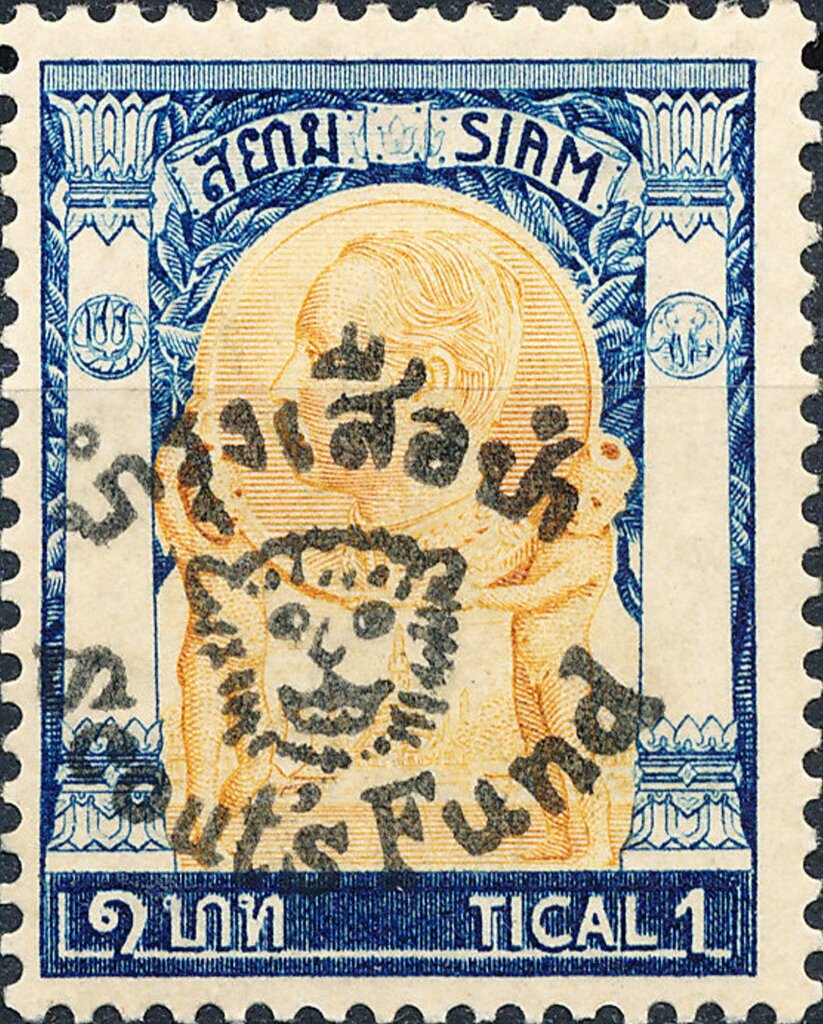
Piece details
Identity
- Piece codeStamp code YYYY.ENT.SS-PP — series code plus stamp order (e.g. 1900.CGH.01-02).
1920.THA.02-05- SeriesThe set this stamp belongs to.
- Scout's Fund — Type II
1920.THA.02· piece 5 of 6 - EntityPostal authority that issued the stamps (country, territory, or historical entity).
 Thailand (THA)
- Year / date
- 1920-02-03
- Face valueDenomination on the stamp; +n is a charity surcharge when present.
- 15 + 5 satang
- Format
- Stamp
- TypeIssue kind. Charity issue = postage + voluntary surcharge (e.g. 6+4), not an overprint.
- Charity issue
- Colors
- Blue
- CollectionIn collection if you have it; Purchased if it is bought but not yet received (do not buy again); Wanted otherwise.
- ✓ In collection
Production
- PerforationsHole gauge between stamps (e.g. 12, 13½). Higher ≈ finer.
- 14
- Printing
- Recess
- Size
- 22 x 30 mm
Catalog numbers
- DomfilDomfil thematic catalog number (scouting).
- 920.9
- ScottScott catalog number (Americas).
- TH B20
- MichelMichel catalog number (Europe / DE).
- TH 160
- YvertYvert & Tellier catalog number (FR).
- TH 156
- Stanley GibbonsStanley Gibbons catalog number (UK / Commonwealth).
- TH 209
Notes
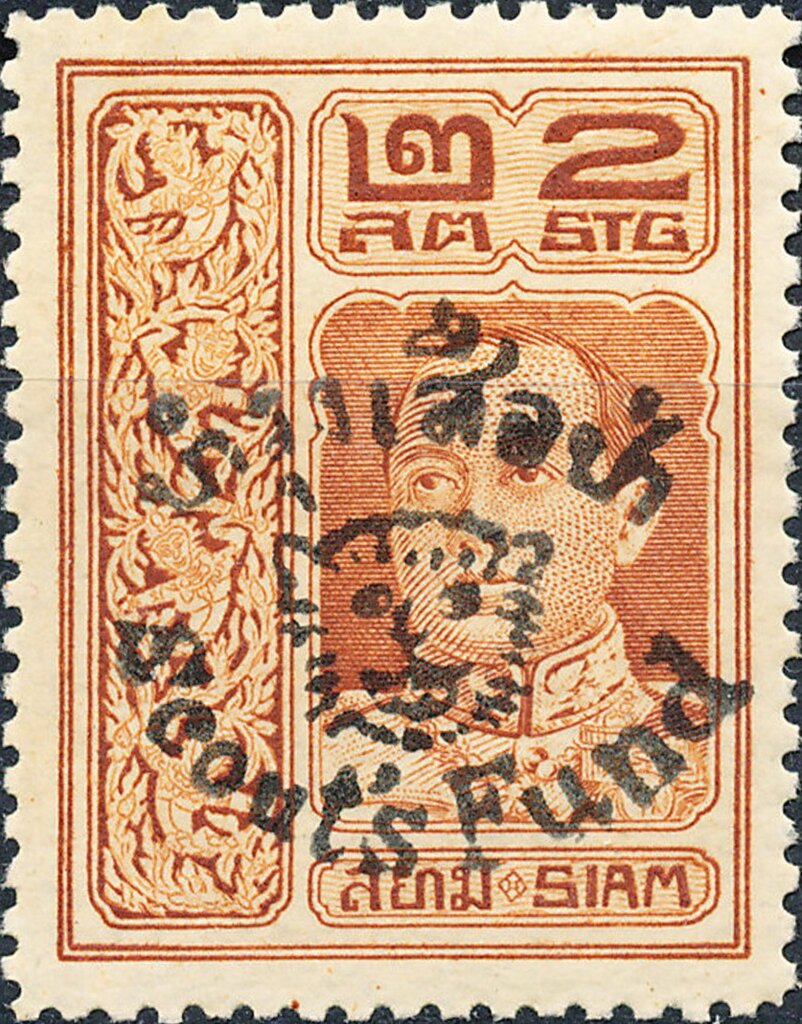
Black Type II rubber overprint. Portrait of King Vajiravudh (Rama VI). Base stamp Waterlow & Sons.
Series history
Type II belongs to the same February 1920 Scout’s Fund campaign as Type I: semi-postals sold so that the premium over postage financed Scouting in Siam — the Luk Suea (“Tiger Cubs”) junior division of the Wild Tiger Corps founded by King Vajiravudh (Rama VI).
Like Type I, Type II is a black rubber handstamp applied one stamp at a time, so inking and placement wander. The difference is the overprint design itself: Type II uses a second, distinct tiger-head / bilingual legend layout (not the Type I handstamp). Collectors separate the two series by comparing the tiger’s face and lettering; catalogues list them as Scott B18–B23 (Type II) versus B12–B17 (Type I).
The underlying stamps again show the royal portraits. Most values carry King Vajiravudh (Rama VI); the 1 tical high value shows King Chulalongkorn (Rama V). Design of the main Vienna printings is by C. Tamagno (Imperial Printing Works, Austria); selected values come from Waterlow & Sons or Giesecke & Devrient. Face values are dual postage + charity, parallel to Type I, with minor catalogue differences on the surcharged low values.
Compared with Type III (metal type, blue or red, December 1920, different Waterlow portrait set, seven single face values), Types I and II are the hand-stamped black pair. Forgeries of Type II are especially common — including handstamps copied from the simplified Scott catalogue drawing and the notorious “Scont’s Fund” spelling error.
ATA 1964 groups the black handstamp types and stresses that commercial and registered covers with mixed frankings are more trustworthy than pure Scout overprint covers; blocks of four exist, with hand cancel angles and inking varying stamp to stamp.